Hiya again
Inspired by a facebook "game" in which I was found to be most like a poem by John Berryman, I went off in search of a poem/poet that would chime better with the fact that I'm actually a woman, which the providers of that platform do not seem to realise.
So I've just discovered a new author, Anne Bradstreet (c. 1612 – September 16, 1672), an English-American writer, the first published American poet, and the first woman to be published in Colonial America. According to Wikipedia, her work was very influential to Puritans in her time. According to Joel Athey at Modern American Poetry, she was also a great influence on John Berryman, who 'published Homage to Mistress Bradstreet in the Parisan Review' in 1953. Athey writes:
'Berryman addressed Bradstreet as both lover and listener, extending himself through her tribulations as an exile in the Rhode Island colony. He included personal tragedies such as her heart problems ("wandering pacemaker,") as well as identified with her situation, where he awaits "in a redskin calm." 'Their tension is evidenced even in the pauses:
"You must not love me, but I do not bid you cease"'
Now, this line sums me up completely!
But here's a taste of Bradstreet -- I'm quoting the first poem in full. It speaks to me who has the greatest difficulty deciding when a text is good enough, be it a translation for my clients, be it a poem or – the hardest of all – a story. Not much has changed in the course of almost 350 years...
Thou ill-formed offspring of my feeble brain,
Who after birth did'st by my side remain,
Till snatched from thence by friends, less wise than true,
Who thee abroad, exposed to public view,
Made thee in rags, halting to th' press to trudge,
Where errors were not lessened (all may judge).
At thy return my blushing was not small,
My rambling brat (in print) should mother call.
I cast thee by as one unfit for light,
Thy visage was so irksome in my sight;
Yet being mine own, at length affection would
Thy blemishes amend, if so I could:
I washed thy face, but more defects I saw,
And rubbing off a spot still made a flaw.
I stretched thy joints to make thee even feet,
Yet still thou run'st more hobbling than is meet;
In better dress to trim thee was my mind,
But nought save homespun cloth, i' th' house I find.
In this array 'mongst Vulgars may'st thou roam.
In critic's hands beware thou dost not come,
And take thy way where yet thou art not known;
If for thy Father asked, say thou hadst none;
And for thy Mother, she alas is poor,
Which caused her thus to send thee out of door.
I'm struck by the fact that Bradstreet sends her poems out before they're perfect because she needs the money. On the other hand, I suspect she knows full well her poems are as perfect as they can be but it wouldn't do for her to say so – that would be bragging, and bragging's not on. It still isn't, is it, at least for women, to express pride in their work...
*****
And I can't resist this one, dated two-hundred and nintety-three years, to the day, before my birth.
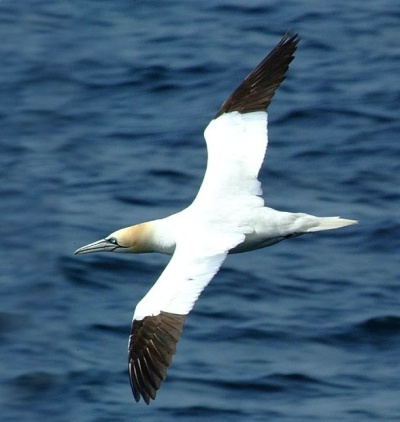
It's a long poem so I've cut some lines to make it more manageable. You can read the original by clicking on the title. I am certain she took the saying 'children fly the coop' for inspiration here, representing herself as the mother hen and considering everything around her 'chicks' in terms of fowl and other birds (of prey):
I had eight birds hatched in one nest,
Four cocks there were, and hens the rest.
I nursed them up with pain and care,
Nor cost, nor labour did I spare,
Till at the last they felt their wing,
Mounted the trees, and learned to sing;
Chief of the brood then took his flight
To regions far and left me quite.
[MPJ comments: Here follows a description of four of her other older children 'flying the coop' and what becomes of them.]
My other three still with me nest,
Until they're grown, then as the rest,
Or here or there they'll take their flight,
As is ordained, so shall they light.
If birds could weep, then would my tears
Let others know what are my fears
Lest this my brood some harm should catch,
[MPJ comments: The author describes her fears in great detail, and how she cared for her 'chicks' when they were young.]
My cares are more and fears than ever,
My throbs such now as 'fore were never.
Alas, my birds, you wisdom want,
Of perils you are ignorant;
Oft times in grass, on trees, in flight,
Sore accidents on you may light.
O to your safety have an eye,
So happy may you live and die.
Meanwhile my days in tunes I'll spend,
Till my weak lays with me shall end.
[MPJ comments: In about ten lines, Bradstreet describes what the rest of her pious writer's life will look like now that her children have all gone. She ends on an assertive note, which shows that she's fully aware of her achievements. ]
When each of you shall in your nest
Among your young ones take your rest,
In chirping language, oft them tell,
You had a dam that loved you well,
That did what could be done for young,
And nursed you up till you were strong,
And 'fore she once would let you fly,
She showed you joy and misery;
Taught what was good, and what was ill,
What would save life, and what would kill.
Thus gone, amongst you I may live,
And dead, yet speak, and counsel give:
Farewell, my birds, farewell adieu,
I happy am, if well with you.
*****
What a lovely expression, in the last few lines, of the notion that we live on in the minds of those who loved us.
Nuff played now – back to work.