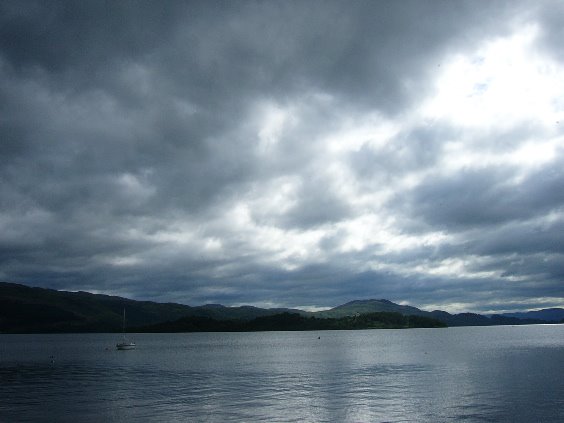
(After sunset on Kilmory Beach, Sound of Jura, Argyll, Scotland.
© all photos: Margaret Powell, July/Aug. 2006)
Welcome and/or welcome back!
Just back from a brief holiday in the Loch Gilp/Crinan Canal area, which is a fantastically beautiful part of Scotland. My hopes of escaping unbearably hot and humid weather in Switzerland were satisfied to perfection!
The area is rather thinly populated -- great for a Swiss who deplores the fact that virtually all of her country is built-up and crammed full of people. Low population, however, spells difficult times, not only for communities (schools, shops etc.) but also for the environment: vast tracts of land are reverting to impenetrable scrubland and stinking, stagnant pools.
However, this blog is to celebrate the generosity of the people who live there, the beauty of the landscape, and the fact that empty beaches attract otters and seals, while near empty fields and generous wetlands provide safe havens for birds and other small wildlife.
Enjoy!
One of the more spectacular feats of civil engineering (and plain hard labour) in the northern hemisphere only reveals itself at second glance. It's the Crinan Canal between Ardrishaig on Loch Fyne and Crinan on Loch Crinan, off the Sound of Jura. Built in the early 19th century, it helps sailors avoid the rather treacherous voyage around the Mull of Kintyre. Apparently, each time the lock is emptied out into the Sound of Jura (west) or Loch Fyne (east), about a quarter million gallons (or about a million litres for metrically-minded readers) of fresh water pour out to sea. Every day the canal requires millions of gallons of fresh water from feeding lochs in the hills above. Luckily, the area is not one of the driest in the world...
Typically, it was a wet, drizzly day (Scottish: drych, sorry, wrong spelling: dreich it is -- thank you, Richard!) late in July when I visited the Crinan Canal. (For lots more information on the area, you might want to visit http://www.toadholidays.co.uk/html/crinan_canal.html -- I decline responsibility for the contents of that site but found plenty of interesting facts and ideas. It also has some excellent photographs taken on days with perfect visibility.)

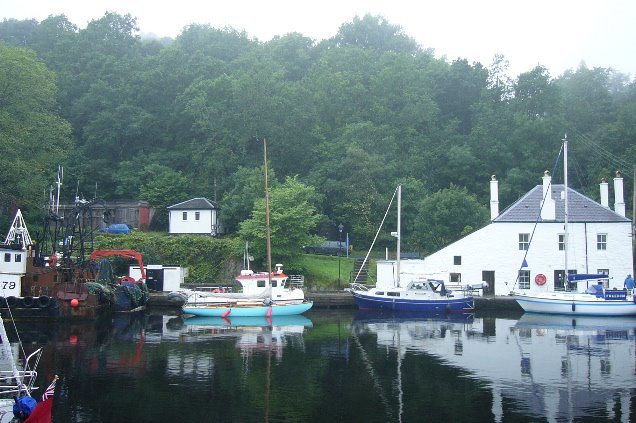
The canal basin just before the last lock on the Crinan side. The white building on the right houses a great little café with delicious home-made cakes -- one helping will easily feed two!

I told you it was a dreich day, didn't I... :)


The Vital Spark depicted above is a rusty, sad-looking old thing, one of the last remaining Clyde Puffers -- the steamhorse of the Scottish west coast. According to the website of the Inveraray Maritime Museum -- http://www.inveraraypier.com/puffer.html -- there must be at least one other Clyde puffer called the Vital Spark, and that one in considerably better condition. As it has some very interesting information the text below between *** and **** quotes from that website:
***
VIC 72 - Vital Spark - was the last working Clyde Puffer
The Puffer was brought to Inveraray in 2001 -- 'Vic 72' built in 1944 at Hull, she was one of the last VIC class puffers built to have a loadline certificate to carry cargo and is powered by Diesel Engine. VIC stands for Victualing Inshore Craft (Victual meaning Supplies)
The Vital Spark 'Eilean Eisdeal' was the name given to her by the Easdale Shipping Company but she was re-registered in 2006 as the Vital Spark after the stories written by the Inveraray writer Neil Munro who wrote about 'Para Handy', skipper of the puffer, the 'Vital Spark'.
• Easdale Shipping -- She was operated by Easdale Shipping Company, working out of Ayr harbour as of 1994 and Easdale.
• Made to Measure -- The puffers were designed to negotiate the Crinan Canal and their max length could not exceed 67 ft.
• Fact File:
Length Overall: 20.36 metres (66.8 feet) Breadth (18.5 feet) Depth (11.5 feet) -- Net Tonnage: 41 -- Gross Tonnage: 132 (originally 96) -- Draught fully laden: 10.5ft fore and 11.5ft aft -- Construction: Steel Hull with Diesel Engine -- Builder: 1944, S & D Brown of Hull
• History:
1944 - 1984, VIC 72 - named Mercantile Eldesa
1984 - 2001, Merchant Carrier- renamed Eilean Eisdeal
(Operated by The Easdale Shipping Company her cargos included coal, hay, fish food, seaweed, kit homes, and assorted general cargo, and ran all over the West Coast of Scotland and as far south as Liverpool..)
2001 - 2005, Maritime Exhibit at Inveraray Pier
2005 - purchased by the new owners of the Inveraray Maritime Experience with plans well underway to preserve her.
2006 - renamed Vital Spark
****
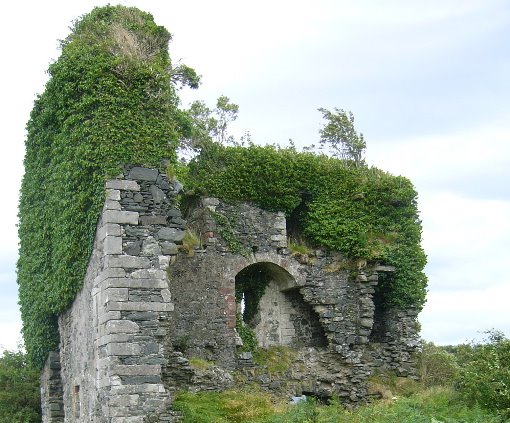
Much less spectacular, but absolutely delightful, are some areas along complicated Loch Sween. The rather touristy yachter's village of Tayvallich may hold attractions to some, but I felt much happier just south of the Knapdale Forest. On my next visit I hope to explore that forest on foot -- there are supposed to be some fine walking trails.


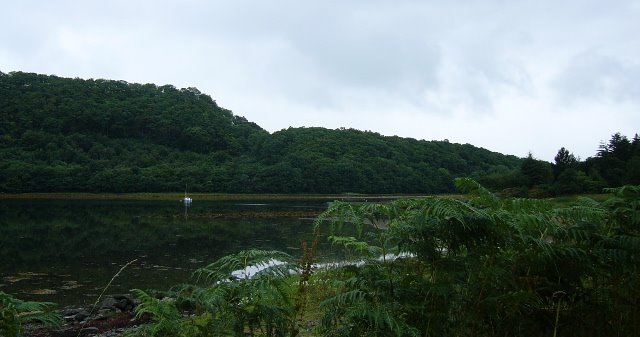
Some privileged folks have little sailboats moored in the shallow waters at the top end of Loch Sween.
Summer evenings can be romantic, as long as there's a bit of a breeze to keep the midges at bay:

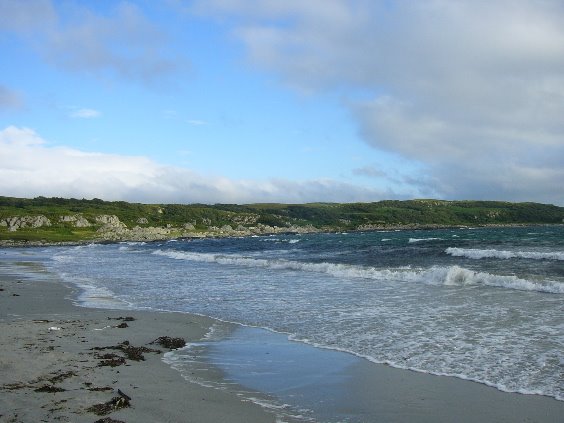
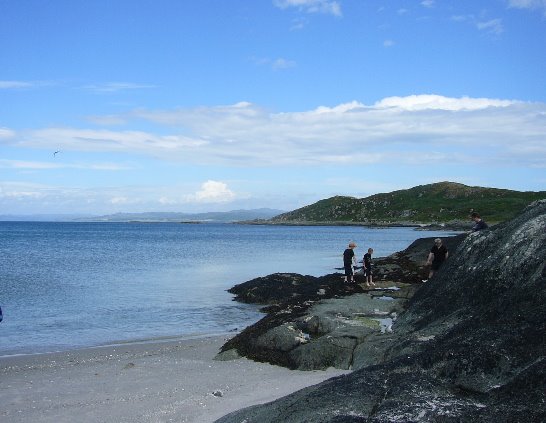
South of Castle Sween, of which I have no photo, lies the tiny old village of Kilmory. Apart from some rather handsome cottages, most of them used by holidaymakers rather than permanent residents, it has a lovely chapel dating back to the 13th century or so, and a beach that is attractive, regardless of the weather:

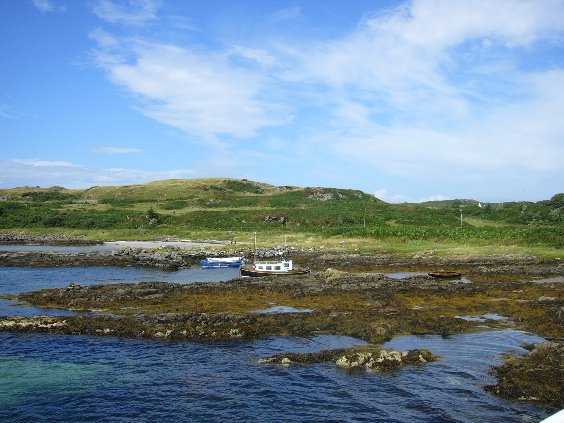
My generous host and guide suggested a trip to the small island of Gigha between Kintyre and Islay (having been there for the day I can now safely say that overnighting would be even better). The colours were just stunning that calm Sunday morning as we arrived by the first ferry sailing from Tayinloan at 10AM:

The village of Ardminish sports a couple of watering holes, a small hotel, several B&Bs, a grocery shop, post office, elementary school, a brand new art gallery and crafts shop well worth a visit, and one fabulous garden open to the public. Achamore Gardens were largely created by Sir James Horlick, owner of Gigha from 1944.
According to the leaflet available from the entrance to the gardens, 'By 1970 the gardens were a magnificent tapestry of camellias, azaleas and various sub tropical shrubs as well as rhododendron. On his death Sir James left some of his collection to the National Trust for Scotland. The island then passed through three family owners, Landale, Potier and Holt, all of whom continued the upkeep of the gardens.
In March 2002 the Isle of Gigha was the subject of the largest community buyout in British history. With the guidance of the National Trust for Scotland and under the lifelong dedicated care of head gardener Malcolm McNeill, the Isle of Gigha Heritage Trust is now continuing the work of maintaining and improving the gardens for the benefit of islander and visitor alike.'
Thank you, folks, well done!
The gardens were probably past their best by end July, but even so they looked splendid and were full of splashes of colour. I even discovered a hint of Australia:


A short climb up steep Spring Bank took us to a lookout spot from where we could just see the islands of Islay and Jura on the horizon. The sun was hot, the bees were buzzing and a couple of dragonflies were cavorting about us. I could have stayed there much longer than we did...

However, the north end of the island was beckoning, and the promise of sandy beaches. A half-hour bicycle ride along the winding road heading north from the main village of Ardminish took us to Tarbert, a narrow strip of land where the Sound of Gigha almost meets up with the Sound of Jura. From the road the view of Jura was suddenly much better:


A brief swim in the clear waters of West Tarbert Bay was refreshing. I enjoyed watching white-and-grey jellyfish grazing along the sandy seafloor and scooting away as soon as the shadow of my body fell on them.
The last ferry took us back to the mainland at 4:30PM, much too soon, really, despite the by then rather heavy rainfall. I was really sorry to leave, having chatted (or blethered) with several extremely friendly islanders (old-timers and incomers). Gigha deserves a visit, but perhaps I shouldn't say this too loudly...
By the time we reached Tarbert (on the mainland) and had climbed up to the castle ruins and down again, we were ravenous. I don't think I've ever had better fish and chips. A great mixed salad came with them, too. Can anyone out there remind me of the name of that pleasant, clean chippy?


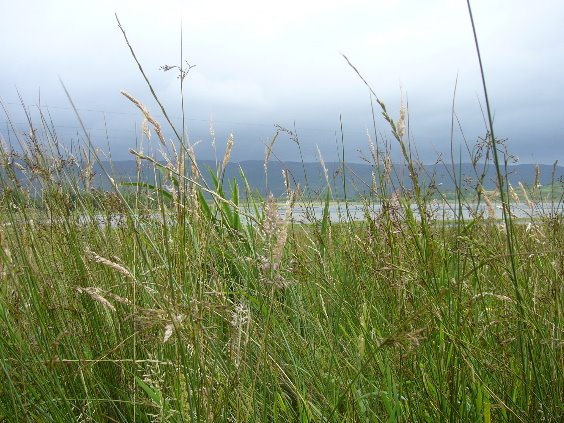
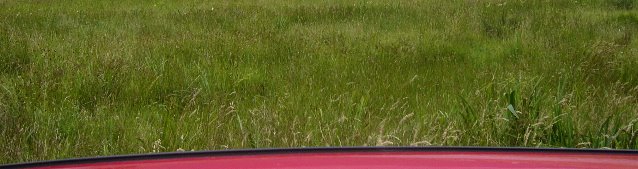
Some way down from Tayvallich, on a hillside above wetlands with swaying grasses and humming with insects

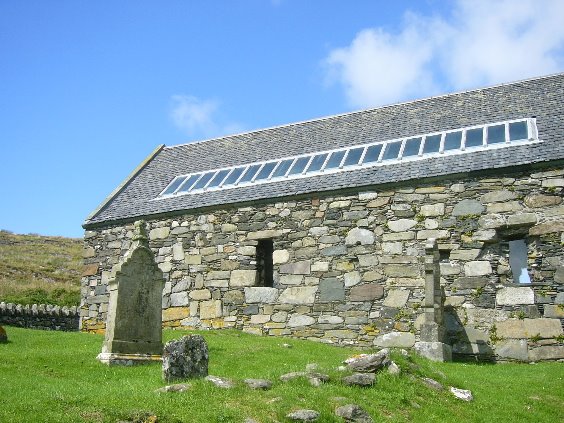
... stands Keills Chapel, nicely restored, except for the rather ugly roof windows which, however, do light the interior perfectly. A new cross has been placed where the original once stood. There's a plaque outside the chapel to explain it all, although the comment inside the chapel places the cross in the 8th century.


The well-groomed grounds around the chapel are peaceful. The view changes all the time, depending on the way the clouds race across the sky. Not many people find their way down the single-track road, which would be perfect for bicycling. Next time I want better binoculars to really see the seals sunning themselves on the skerry out in Loch Sween.


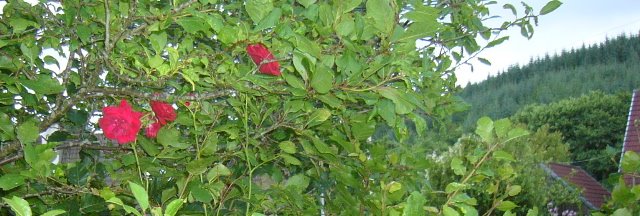
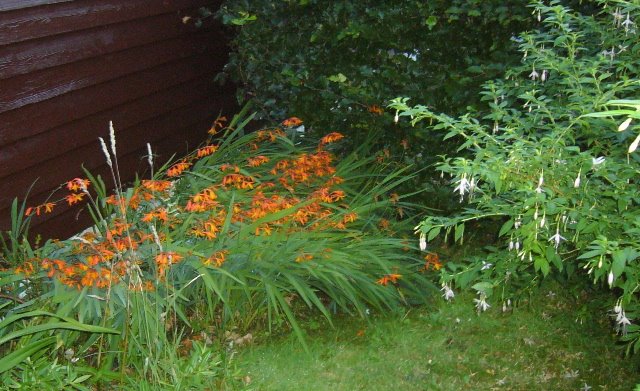
People everywhere in the area have the most beautiful gardens, lovingly tended. Buddleia compete with lilies, roses, mallow, foxtails and tiny pale fuchsia blossoms on big shrubs. Evidently, the climate is quite mild, certainly fuchsias would never survive the winter here in Bern.


Among other places the road back to Glasgow airport takes one past Firkin Point and Luss on Loch Lomond. Very touristy, but there's a reason why this area so close to Glasgow attracts thousands of visitors every summer:


(This photo was taken in April 06, on my first visit to Firkin Point.)
That's it for now. I hope to be back, to enjoy the generous company of my Scottish friends, to drink in more of the clean air and huge skies, to stroke again the gnarly trunk of the oak depicted above.
Thank you for your attention, and for sending in your comments.

(After sunset on Kilmory Beach, Sound of Jura, Argyll, Scotland.)
(© all photos: Margaret Powell, July/Aug. 2006)
 Hiya
Hiya